Parramatta Grass Control: Identify, Kill & Prevent GPG
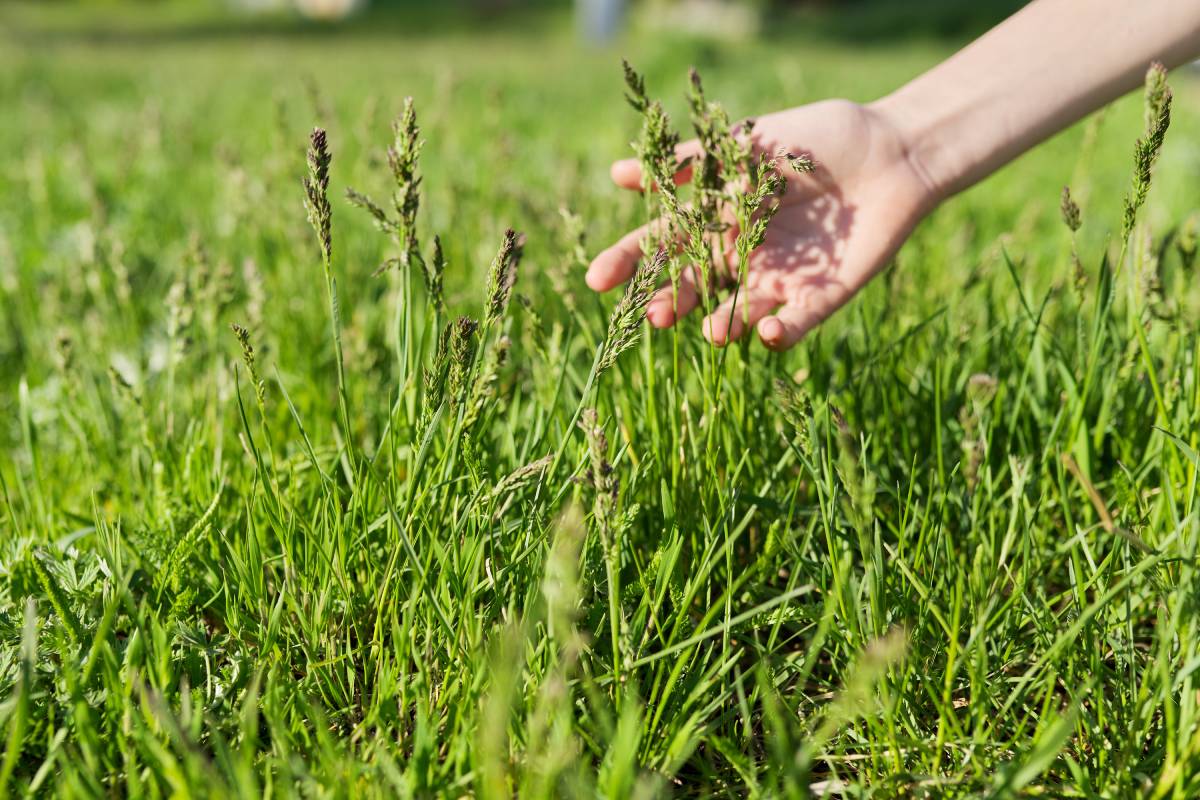
Is your pasture losing the battle against tough, wire-like grass that livestock refuse to eat? You aren’t alone. Parramatta Grass (Sporobolus africanus)—and its larger cousin, Giant Parramatta Grass (GPG)—is a nightmare for landowners across Australia.
It starts as a few isolated clumps. But if left unchecked, this invasive weed quickly dominates paddocks, slashing land value and destroying the productivity of your turf parramatta wide. The worst part? Mowing often makes it worse, spreading sticky seeds on your machinery to every corner of your property.
In fact, the presence of noxious weeds is a major red flag for investors. Smart buyers know to check for these infestations when deciding what to inspect before buying a secondhand house, as inheriting a biosecurity issue can cost thousands in fines and rehabilitation.
But you can reclaim your land. This guide moves beyond basic government advice to give you a strategic, season-by-season battle plan. We will cover how to identify it correctly, the specific chemistry needed to kill it, and the hygiene protocols to keep it gone for good.
The “Sooty” Threat: What is Parramatta Grass?
Effective Parramatta Grass control requires an Integrated Weed Management (IWM) approach. The most successful strategy combines the application of Flupropanate (for long-term residual kill) with spot-spraying Glyphosate during active growth. Critical to success is stopping seed spread: avoid slashing infected areas and enforce strict vehicle hygiene to prevent re-infestation of clean turf.
Parramatta Grass is a tussocky perennial weed that originated in Africa but has made itself at home in Australian soils. It is particularly aggressive because of its seed production. A single square meter of infestation can produce up to 85,000 seeds per year.
Once these seeds hit the soil, they can remain viable for years. This means “killing the plant” is only half the battle; you must also manage the seed bank.
Identification: How to Spot the Enemy
Before you spray, you must confirm the target. Parramatta Grass is often confused with other drop-seed grasses, specifically Giant Rat’s Tail Grass (GRT). While control methods are similar, knowing the severity of your infestation is key.
Key Visual Identifiers:
- The Leaves: Tough, wiry, and dark green. They are difficult to pull out by hand.
- The Seed Head: This is the giveaway. The flower spikes are widely spaced and grow up to 50cm tall. As they mature, they turn a leaden, dark grey colour—often described as having a “sooty” appearance.
- The Feel: If you run the seed head through your fingers, it feels slightly sticky or greasy.
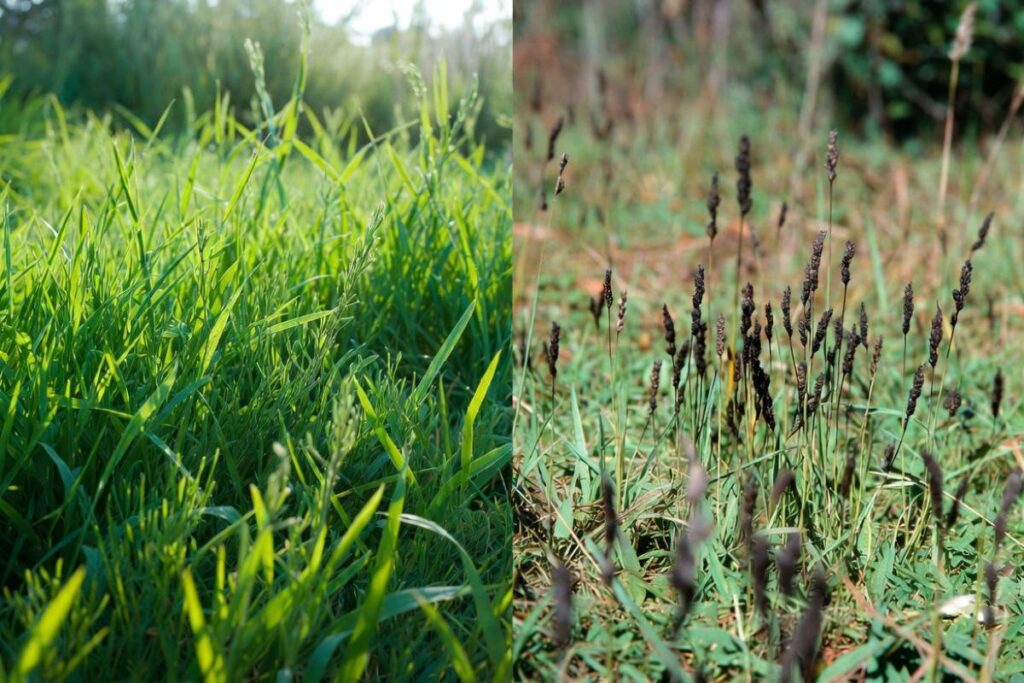
Why It Matters: If you misidentify a native grass as Parramatta grass and blanket-spray it, you remove the competition. Bare earth is exactly what Parramatta grass seeds need to germinate. Never create bare ground unless you have a re-seeding plan.
The Golden Rule: Why Slashing is Dangerous
Many property owners see a weed and think, “I’ll just slash it down.”
With Parramatta Grass, slashing is the worst thing you can do.
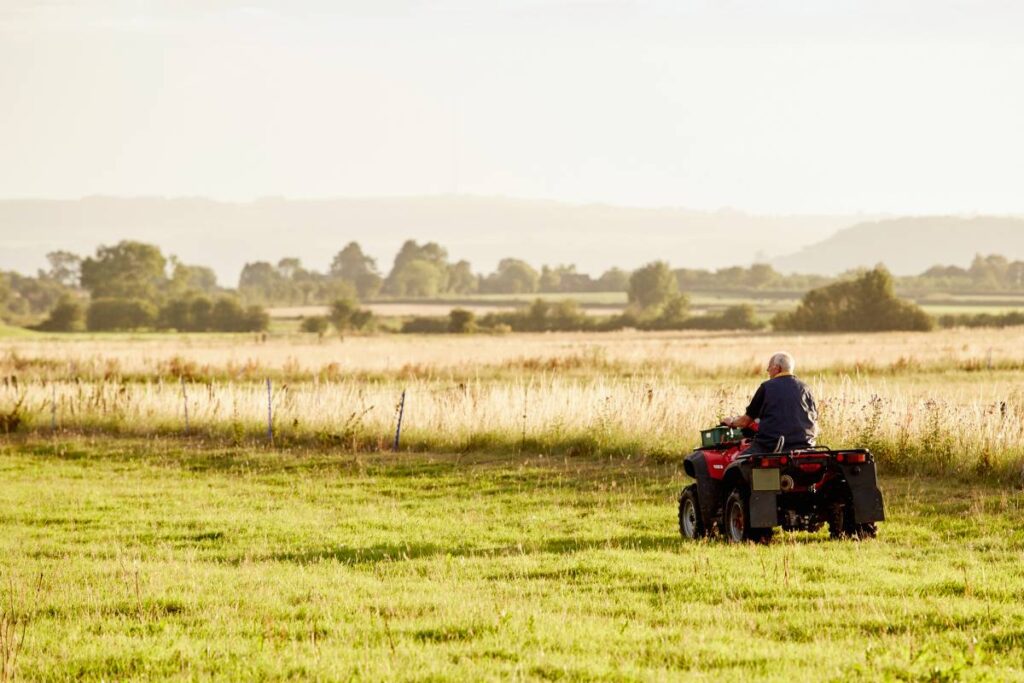
To maintain the pristine condition of turf parramatta estates are known for, avoid slashing during seeding. The seeds of this weed become sticky when damp. If you slash a paddock during seeding season:
- The slasher acts as a seed broadcaster, flinging seeds further than the wind would.
- Seeds stick to your tractor tires and slasher deck.
- You drive to a clean paddock, the mud dries, and the seeds drop off.
- Result: You have just planted the weed in your clean zones.
The Strategy: Only slash if the plants have not gone to seed yet, or if you are specifically trying to reduce biomass before spraying (and can wash down immediately after).
Chemical Control: The Heavy Artillery
To dominate this weed, you need to understand two main chemical groups. Always check the APVMA permit for your specific region before application.
1. Flupropanate (The Long Game)
This is a residual herbicide. It doesn’t kill the plant instantly. Instead, it is absorbed by the roots and stays in the soil, slowly killing the plant over 3-6 months.
- Pros: It kills the existing tussock and emerging seedlings for up to two years.
- Cons: It has a long “withholding period” for livestock (often 14 days for spot spray, but months for slaughter). It also harms some pasture species like Paspalum.
2. Glyphosate (The Quick Kill)
This is a non-selective knockdown herbicide.
- Pros: Kills green growth fast.
- Cons: It kills everything it touches, leaving bare patches. It has zero residual effect on seeds in the soil.
The Pro Strategy: Use Flupropanate as your primary weapon for established tussocks. Use Glyphosate only for spot-spraying or wick-wiping to minimize damage to surrounding grass.
Step-by-Step Eradication Plan
Here is your timeline for reclaiming your land.
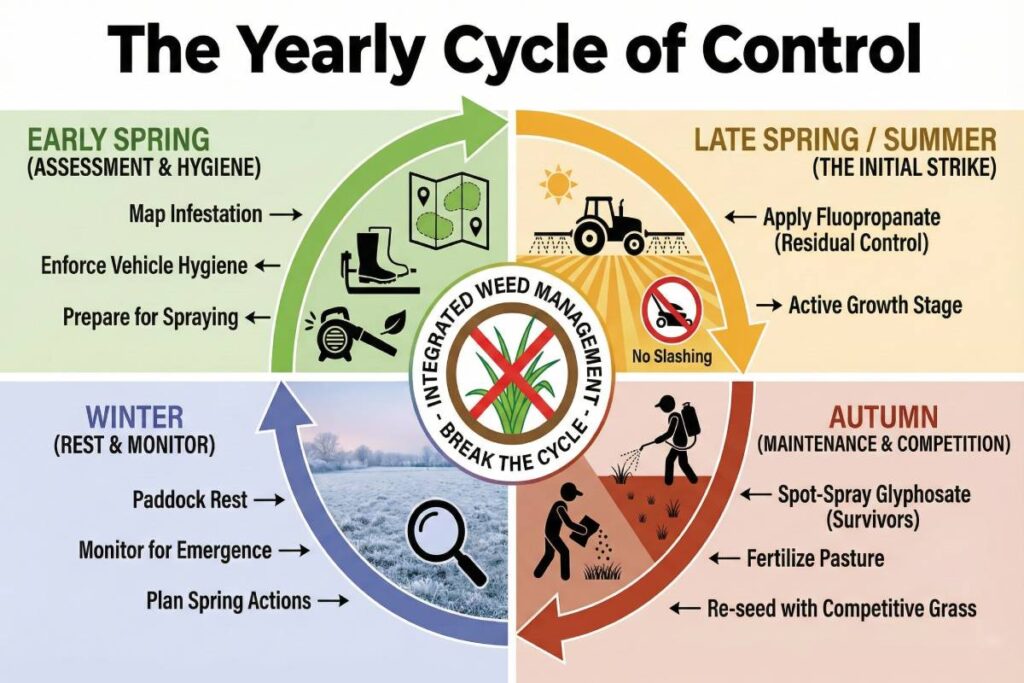
Phase 1: Assessment and Hygiene (Year 0)
- Map the infestation. Mark “Clean” zones and “Dirty” zones.
- Stop movement. Do not drive from the Dirty to the Clean zones.
- Quarantine. If buying new stock, hold them in a yard for 10 days to ensure they pass any seeds before entering your clean paddocks.
Phase 2: The Initial Strike (Late Spring / Early Summer)
- Apply Flupropanate. This is best applied when the grass is actively growing but before it sets massive amounts of seed.
- Dosage: Follow the label strictly. Underdosing creates herbicide resistance.
- Wait. The grass will yellow slowly. Do not panic if it doesn’t die in a week.
Phase 3: Maintenance and Competition (Autumn)
- Check for survivors. Spot-spray any green clumps with Glyphosate.
- Fertilize and Reseed. Weeds hate competition. If your desired pasture (Kikuyu, Rhodes, etc.) is thick and healthy, it shades out Parramatta grass seedlings. If you need to repair large bare patches, sourcing high-quality stock from a reputable grower like A View Turf in Sydney ensures you establish a dense, competitive ground cover that prevents new weeds from taking root. Furthermore, learning how to recover and keep grass healthy, especially during Sydney’s scorching summers, will ensure your competitive pasture stays strong enough to choke out emerging Parramatta grass seedlings
- Soil Health: Test your soil. Parramatta grass loves compacted, acidic soil. Aerating and liming can shift the balance in favor of your crops.
Vehicle Hygiene & Prevention
If you hire contractors for turf parramatta wide or earthmoving, you are at risk.
The “Come Clean, Go Clean” Protocol:
- Inspect: Check the grill, undercarriage, and radiator of any machinery entering your property.
- Wash Down: designate a specific “wash down” area. This should be a gravel or concrete pad where wash water can be contained.
- Blow Down: Use a leaf blower to remove dry chaff from slashed decks before leaving a dirty paddock.
Conclusion
Parramatta grass is not a weed you defeat in a weekend. It is a long-term campaign. However, by shifting your mindset from “mowing it down” to “managing the seed bank,” you can win.
Remember the core pillars: Identify correctly, apply Flupropanate for residual control, maximize competition from healthy pasture, and strictly enforce vehicle hygiene.
Your land is your most valuable asset. Don’t let a wiry invader take it over. Start your management plan today—before the next seed head matures.
Effective land management requires a holistic approach, from the soil up to the canopy. Just as you weigh the pros and cons of tree lopping vs. tree pruning to protect your garden’s structure, you must be equally strategic and long-term with your weed eradication plan.
Ready to reclaim your paddocks? Check your shed for Flupropanate and walk your fence lines this weekend.








Post Comment